
 Login
Login
Category: Article
-
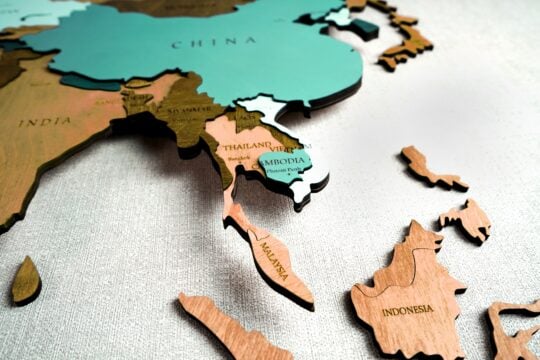
The Legal Landscape in Asia Pacific: Impact Law Updates
Explore recent impact law and policy developments across Asia Pacific, including blended finance innovations, regulatory reforms in the philanthropic sector, and significant legal decisions shaping civic rights and sustainable finance.
-

Blue Economy Briefing
This briefing outlines key developments shaping the blue economy sector in 2026, with the High Seas Treaty entering into force and blue finance commitments reshaping the sector.
-

A New Legal Ethic for a Fractured World
This article sets out why, in the midst of climate crisis, digital disruption, and rising inequality, lawyers must embrace a renewed global legal ethic—grounded in human dignity, accountability, and the rule of law—to collaboratively shape a just and sustainable future.
-

JusticeTech & AI for Law Students
GAIL pioneers JusticeTech and AI for law students in Mexico, with teams from four law schools building new ways for artificial intelligence to serve justice
-

I Am an Impact Lawyer: Getting to Know Leslie Cornell, General Counsel and Chief Compliance Officer at Social Finance, Inc.
This new series by GAIL North America will spotlight our members across the United States and the diverse ways they are practising impact law. For this article, we hear from Leslie Cornell.
Benefit Corporations and B Corps, Blended Finance, Business and Human Rights, Business for Good, Climate and Environment, Corporate Governance, Development Finance, ESG, Impact Finance, In House Lawyers, Innovative Legal Structures, Legislation and Regulation, Mission driven businesses, Philanthropy, Public Interest Litigation, Steward Ownership, Systems Change -

I Am an Impact Lawyer: Getting to Know Julian Harrell, Partner at Faegre Drinker
This new series by GAIL North America will spotlight our members across the United States and the diverse ways they are practising impact law. For this article, we hear from Julian Harrell.
Benefit Corporations and B Corps, Blended Finance, Business and Human Rights, Business for Good, Climate and Environment, Corporate Governance, Development Finance, ESG, Impact Finance, Innovative Legal Structures, Legislation and Regulation, Mission driven businesses, Philanthropy, Public Interest Litigation, Steward Ownership, Systems Change -

Office for the Impact Economy
The Office for the Impact Economy is a new central government hub designed to coordinate and strengthen partnerships with impact investors, philanthropy, and purpose-driven businesses to boost social and economic impact across the UK. Find out more here.
-

RIGHTS OF RIVERS: A practical guide for local communities and local authorities to recognise your local rivers’ rights
The report outlines why England’s current environmental laws are failing to protect rivers and makes a practical, globally informed case for recognising rivers as living entities with legal rights, supported through local councils, communities, and new forms of river guardianship.
-

MEMBER REPORT 2025 – LEGAL SECTOR SUSTAINABILITY UPDATE
Read the 2025 AusLSA Sustainability Insight Report.
-
JOINT PRESS RELEASE EU watchdog slams Commission’s undemocratic environmental rollbacks
The EU Ombudswoman has ruled that the European Commission acted improperly in weakening environmental and human-rights protections through opaque, non-democratic “Omnibus” processes, prompting NGOs to demand stricter transparency and evidence-based lawmaking for all future reforms.