Login
Login
GAIL pioneers JusticeTech and AI for law students in Mexico, with teams from four law schools building new ways for artificial intelligence to serve justice
A mother searching for her missing son.
A teenage girl torn between school and the need to work.
An Indigenous female entrepreneur in Oaxaca trying to start a small business.
A pregnant employee fighting to keep her job.
A student in Chiapas struggling to file taxes or even access basic education.
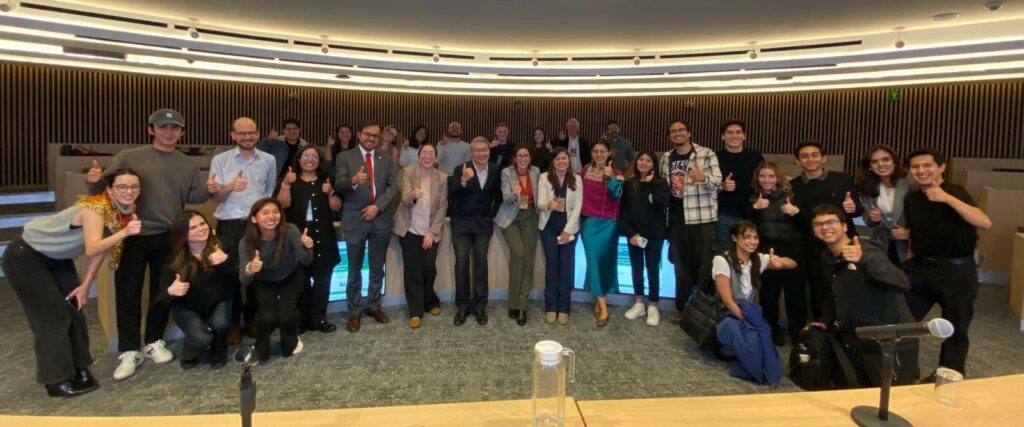
These are the issues and user personas that law students from Mexico City chose and transformed into AI prototypes during the JusticeTech: Workshop on AI for Students as part of the Global Alliance of Impact Law (GAIL) Summit 2025, which was held for the first time in Latin America and hosted by Universidad Iberoamericana (IBERO). In just two hours, teams from four of Mexico’s top law schools imagined and built new ways for artificial intelligence to serve justice.
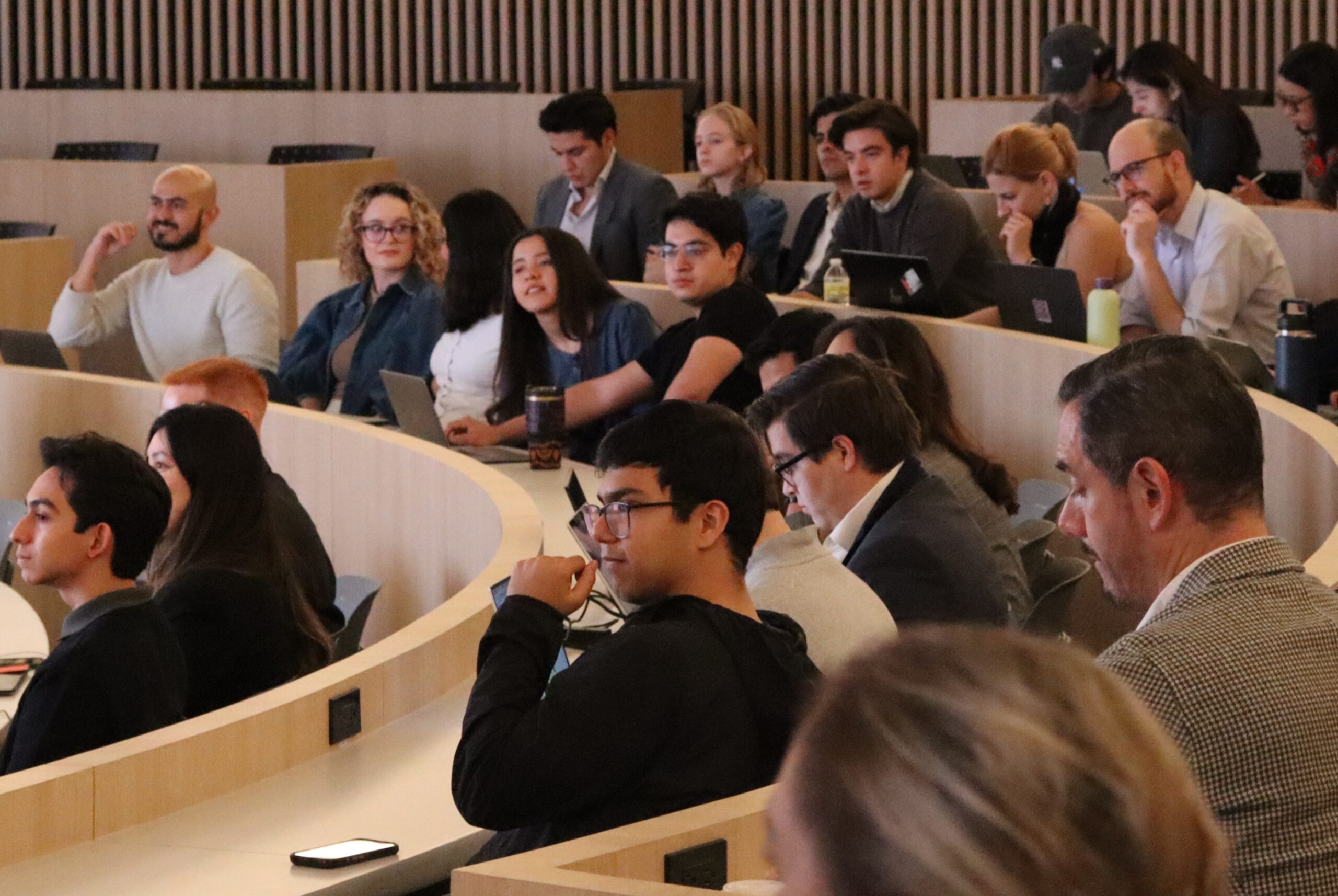
Led by Professor Brian Tang who is a GAIL Asia-Pacific Regional Board member and who applied his impactful methodology developed as Founding Executive Director of Law, Innovation, Technology & Entrepreneurship Law at the University of Hong Kong (LITE Lab@HKU), and convened by Dr. María Fernanda Cobo Armijo, IBERO Department of Law’s Coordinator of Legal Clinics, more than 58 law students and law professors from IBERO, Tec de Monterrey, La Salle and Escuela Libre de Derecho used their creativity to design their own AI-powered solutions to solve justice problems in Mexico.
To set the stage, Brian (who is also co-chair of the Asia-Pacific Legal Innovation & Technology Association), chaired a JusticeTech Panel earlier that morning and shared examples of how AI is already transforming legal practice—from global firms like Freshfields, A&O Shearman, Cleary and Hogan Lovells using it to expedite legal work and generate new sources of revenue, to the emergence of AI native law firms that seemed impossible just a few years ago.
To demonstrate how AI is changing the way we understand and deliver access to justice, Brian’s panel was joined by two legaltech innovators.
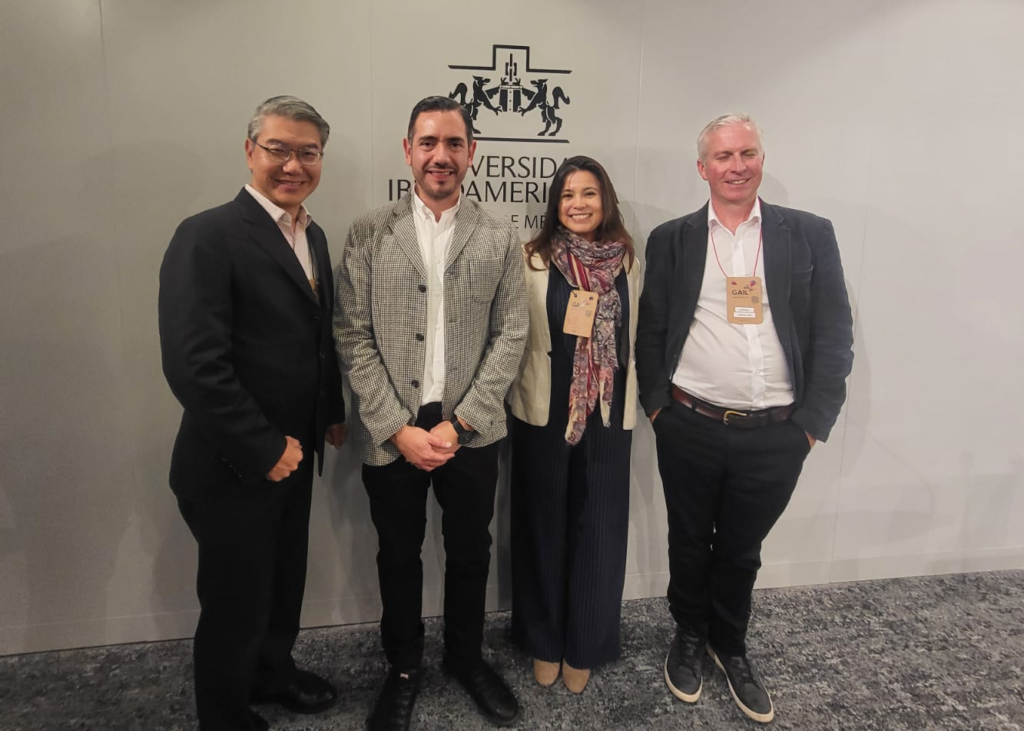
Paul Massey, Founder & CEO of Tabled, showcased how his Libra platform simplifies complexity by unlocking legal data and enabling collaboration between UK legal clinics and pro bono lawyers for impact. I had the honour to share the journey of io Justice from the Netherlands as its Co-founder, and in particular presented IA LucIA—an AI system providing trustworthy, legally-grounded answers to legal questions across Latin America.
Armed with these real-world examples and a practical grounding in key concerns—including bias in training data, hallucinations, confidentiality risks in prompting and regulatory licensing considerations regarding unauthorised practice of law— the law students were then ready to move from theory to practice and rolled up their sleeves for the hands-on workshop.
Legal Design Thinking for Impact
The student teams started by choosing which problem within the Sustainable Development Goals (SDGs) they empathised with and wanted to tackle. They identified the primary user persona they wanted to assist, considering their needs (short-term: money, time) and goals (long-term: aspirations, technology preferences). Groups then generated ideas on how an AI chatbot or tool could assist to address their identified user’s needs and challenges.
As Brian emphasised, we don’t solve “homelessness”—we solve Miguel’s problem, the man sleeping on the street corner. What brought Miguel here? What does he need tomorrow morning? This shift—from abstract categories to real people—helps focus the building of impactful solutions.

Prototyping Impactful AI Chatbot Solutions
Applying key ethical practices such as “never upload confidential or proprietary information,” “always verify outputs,” and ”red-team before publication,” students then experimented with different models like ChatGPT, Claude, and Gemini to build solutions for advancing their identified problems and users.
One IBERO participant shared:
“Experimenting with different LLMs helped us see which model is most user-friendly and empathetic for real users.”
The workshop generated high engagement among participants, who learned that while creating an initial AI chatbot can in fact not be technically difficult, the real challenge lies in making key development decisions and calibrating it to work well for the intended use and user.

As another IBERO participant shared:
“Creating a chatbot is technically simple, but deciding on legal disclaimers and how it interacts with users is the real challenge.”
Planting the Seeds of JusticeTech
The GAIL JusticeTech Workshop marked a bold first step toward a new generation of lawyer built legal technology tools in Latin America. Many students plan to continue developing their prototypes or adapt them for international competitions, connecting what they learned to real world legal, advocacy and litigation challenges.

”This workshop made me realise that law and technology can walk together— one bringing justice, the other scale” said a participant from the Tecnológico de Monterrey.
As Dr. Ricardo Alberto Ortega Soriano, IBERO’s Department of Law Director noted, this is a first step in equipping students with these transformative tools. The hope—and the invitation—is to see more of these collaborative, cross-border efforts multiply across the jurisdictions served by GAIL and beyond, building on the GAIL Summit 2025’s theme: “From ideas to action: shaping the future of law.”
The workshop was recorded and will be available to GAIL members.
To law schools, bar associations, and legal innovation leaders: bring this workshop to your community. The methodology works. The students are ready. And the future of justice—people-centred, empathetic, and empowered by AI—is waiting to be built.