
 Login
Login
Topic: Climate and Environment
-

I Am an Impact Lawyer: Getting to Know Julian Harrell, Partner at Faegre Drinker
This new series by GAIL North America will spotlight our members across the United States and the diverse ways they are practising impact law. For this article, we hear from Julian Harrell.
Benefit Corporations and B Corps, Blended Finance, Business and Human Rights, Business for Good, Climate and Environment, Corporate Governance, Development Finance, ESG, Impact Finance, Innovative Legal Structures, Legislation and Regulation, Mission driven businesses, Philanthropy, Public Interest Litigation, Steward Ownership, Systems Change -

RIGHTS OF RIVERS: A practical guide for local communities and local authorities to recognise your local rivers’ rights
The report outlines why England’s current environmental laws are failing to protect rivers and makes a practical, globally informed case for recognising rivers as living entities with legal rights, supported through local councils, communities, and new forms of river guardianship.
-
JOINT PRESS RELEASE EU watchdog slams Commission’s undemocratic environmental rollbacks
The EU Ombudswoman has ruled that the European Commission acted improperly in weakening environmental and human-rights protections through opaque, non-democratic “Omnibus” processes, prompting NGOs to demand stricter transparency and evidence-based lawmaking for all future reforms.
-

A Few Words from the GAIL President – Q4 2025
Michael Ryland, the President of GAIL, reflects on the growing momentum of the impact economy and calls on impact lawyers, through GAIL’s platform and community, to “raise the bar” by innovating, showing the law’s value, and acting as catalysts for systemic change in the face of urgent climate, social, and political challenges.
-

Law in an Age of Transformation – Keynote by Marcel Fukayama
This keynote session, on 15 October 2025, addressed the widening gap between traditional legal frameworks and the rapidly evolving social, environmental, economic, and technological conditions shaping the modern world.
AI, Benefit Corporations and B Corps, Blended Finance, Business and Human Rights, Business for Good, Climate and Environment, Corporate Governance, Development Finance, ESG, Impact Finance, Innovative Legal Structures, Legislation and Regulation, Mission driven businesses, Philanthropy, Public Interest Litigation, Steward Ownership, Systems Change -

I Am an Impact Lawyer: Getting to Know Patrick Miller, Founding Attorney at Impact Advocates APC
This series by GAIL North America will spotlight our members across the United States and the diverse ways they are practising impact law. For this first article, we hear from Patrick Miller, Founding Attorney at Impact Advocates APC
Benefit Corporations and B Corps, Blended Finance, Business and Human Rights, Business for Good, Climate and Environment, Corporate Governance, Development Finance, ESG, Impact Finance, Innovative Legal Structures, Legislation and Regulation, Mission driven businesses, Philanthropy, Public Interest Litigation, Steward Ownership, Systems Change -
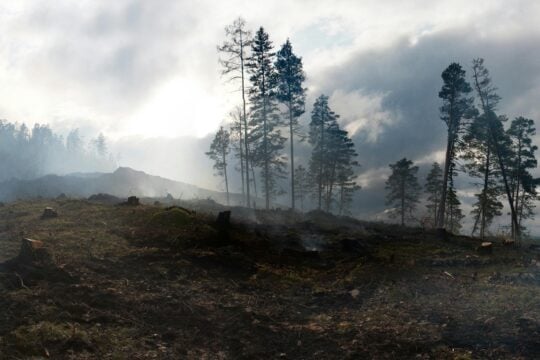
MEDIA BACKGROUNDER: Canada Pension Plan Investment Board Climate Risk Case
Young Canadians Challenge CPP Investments Over Climate Risk. Find out more.
-

Hogan Lovells Event – Rights of Rivers: Fireside chat with Monica Feria-Tinta
Join Hogan Lovells for an energising fireside chat with the remarkable Monica Feria-Tinta, a leading light in public international law and a passionate advocate for the Rights of Nature. Event details here.
-
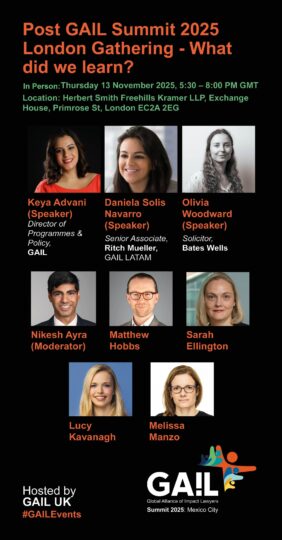
Post GAIL Summit 2025 London Gathering – What did we learn?
This in-person event provided insights from those present at the GAIL Summit 2025 to our local members and explored some of the main themes that arose from the Summit sessions, which covered cutting-edge issues in impact investing, blended finance, climate law, ESG, corporate governance, philanthropy, purposeful business, and emerging legal models.
-

I Am an Impact Lawyer: Getting to Know Rick Davis, Managing Partner at LOHAS
This new series by GAIL North America will spotlight our members across the United States and the diverse ways they are practising impact law. For this article, we hear from Rick Davis from LOHAS.
Benefit Corporations and B Corps, Blended Finance, Business and Human Rights, Business for Good, Climate and Environment, Corporate Governance, Development Finance, ESG, Impact Finance, Innovative Legal Structures, Legislation and Regulation, Mission driven businesses, Philanthropy, Public Interest Litigation, Steward Ownership, Systems Change